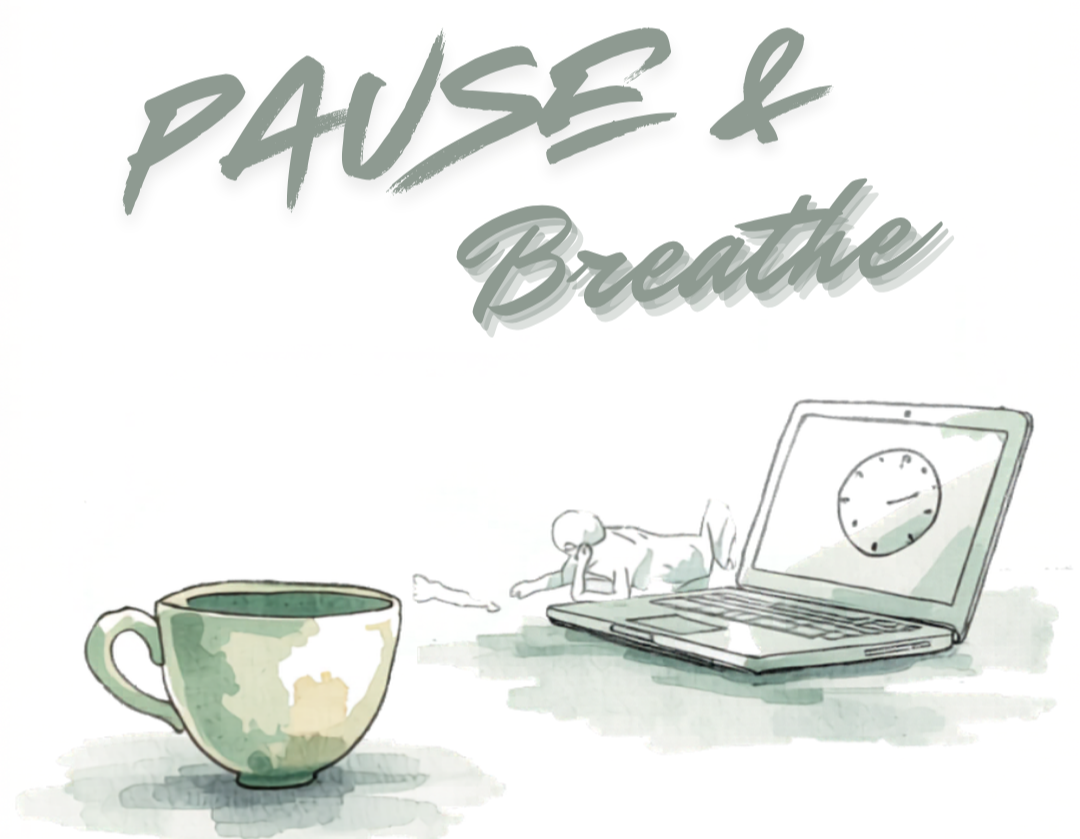
The Art of Pause in a Fast World
It's 11pm and I'm in bed. My phone is next to me because my phone is always next to me. I'm scrolling through a new AI prompt someone shared. Not because I need it right now. Because it's new and I might need it tomorrow and what if I miss the window.
This is fine, I tell myself. It's just a prompt.
But it's not just a prompt. It's the third time this week I've done this. Opened my laptop at midnight. Checked a new tool. Tested a feature. Learned something I don't actually need to know yet. All while telling myself I'm staying sharp.
Staying sharp is the thing we say instead of admitting we can't stop.
I work remotely. Which means I also live at work. My laptop is three feet away from my bed. My work Slack is on my phone. A new prompt drops and I see it immediately. A client has a question and it pings at 9pm. A trend starts and I feel like I should experiment with it before the week ends.
There's no off switch built into this setup. You have to build one yourself. And most of us don't.
I watch other creatives do the same thing. Always learning something new. Always testing a new feature. Always catching up on what you missed yesterday. The energy is frantic. Like if you pause for a day, you'll fall behind forever.
Nobody says this out loud. We say we're "staying ahead of the curve." We say we're "experimenting." We say we're "keeping up with industry changes."
What we mean is: we can't stop.
Here's what's weird: the pause isn't actually radical. It's not some advanced productivity hack. It's just stopping.
But we've made stopping feel like failure.
If you're not working, you're lazy. If you're not learning the new tool, you're falling behind. If you're not experimenting with the new prompt, you're stagnant. If you're checking your phone at dinner, you're just being responsible because work is important.
We've rebranded the inability to stop as ambition. And called rest a luxury we can't afford.
But everyone I know who's actually good at their work? They're not the ones grinding 24/7. They're the ones who stop. Who actually sleep. Who don't check their laptop at midnight. Who can tell you what they did last weekend that had nothing to do with work.
Their work is better because they have time to think about it. Time away from it.
I notice it most in my own head. I'll be with my son, actually present, actually there. And part of my brain is somewhere else. Thinking about a caption I need to write. A design I'm not happy with. A prompt I haven't tested yet. The mental real estate is taken up by work even when my body is at the dinner table.
That's not ambition. That's leakage. My work has leaked into everything and I've called it dedication.
The thing nobody wants to admit is that the constant go is not sustainable. You hit a wall. Or you don't hit a wall and instead you just become someone who doesn't remember what it's like to not be thinking about work. Someone who feels guilty for not working. Someone for whom rest feels like wasting time.
And we've all agreed to pretend this is normal. This is just how it is now.
I don't have a fix for this. I'm not going to tell you to delete your work apps or make a phone-free dinner or practice mindfulness or whatever the productivity gurus are selling as the cure for productivity obsession.
The real thing is simpler and harder: you have to decide that stopping is okay.
Not stopping as a break so you can work better later. Stopping as actually stopping. Time that's yours and not measured by how much you produce or learn or accomplish.
Most of us haven't decided that's okay yet.
I'm still checking prompts at 11pm. Still feeling like I should learn the new thing. Still opening my laptop before coffee because there might be something important.
But I'm noticing it now. And noticing is the first step to changing.
Maybe the real productivity hack isn't another tool or another prompt or another thing to learn.
Maybe it's knowing when to close the laptop and leave it closed.
0 Comments Add a Comment?